
Hampton Projected Versus Actual Release
A projected date is a working calculation. An actual release date is the recorded custody event. A pretrial detainee usually has no sentence-based date because bond, court action, holds, and case outcomes control the next step. A sentenced person may have a projected maxout, but lawful credits and later events can move it.
For Hampton jail custody, request the release sheet. For state custody, use SCDC records and its affirmative Released Inmate List after departure. A transfer also ends one agency's custody without proving community release.
Find Hampton Projected Release Dates
Start with custody class. SCDC’s current search covers people incarcerated in state corrections as of the prior midnight. It excludes county detainees and released people. SCDC Victim Services accepts projected-release inquiries.
- Confirm whether Hampton County or SCDC holds the person.
- Use the SCDC current search for a state prisoner.
- Match the SCDC number and review official sentence data.
- For a local term, call the Detention Center and compare the court order.
- Confirm near departure and obtain the actual release record afterward.
The SCDC Victim Services page documents the inquiry route.
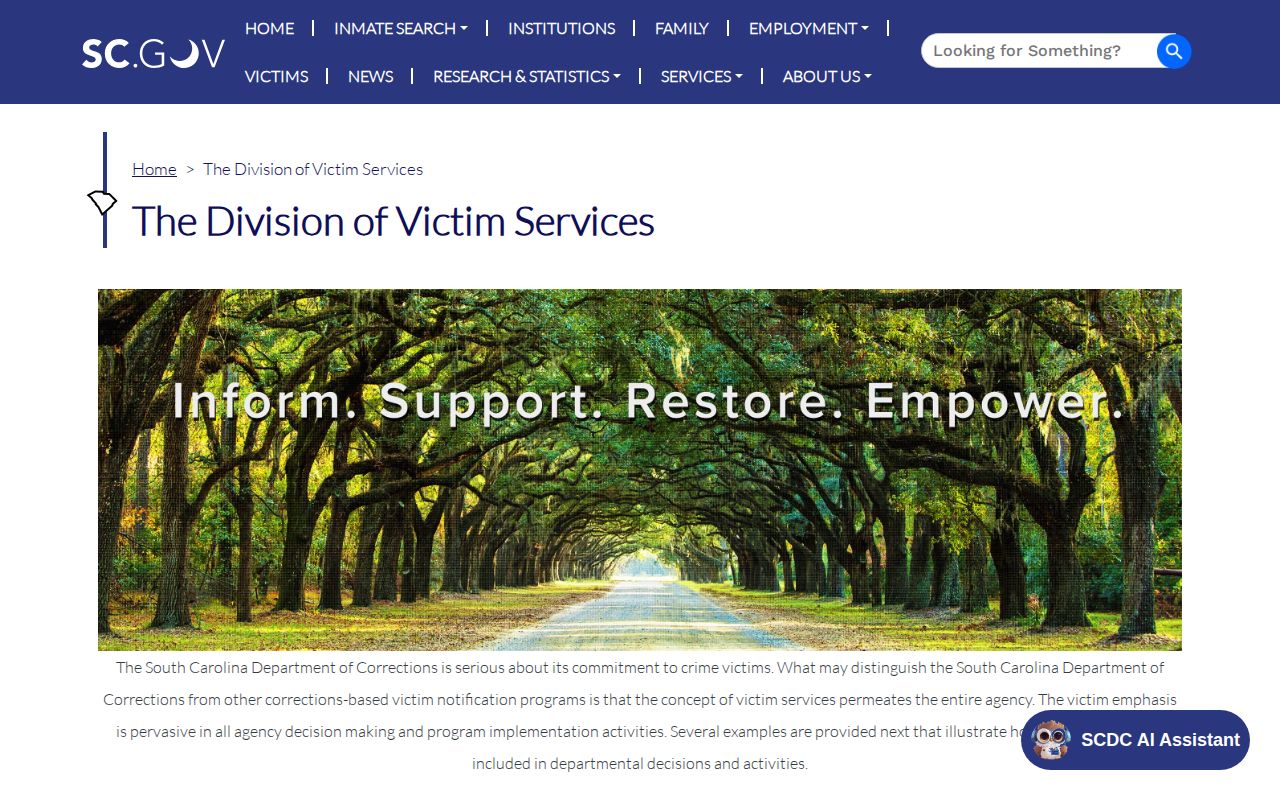
The image documents an inquiry path, not a promised date.
South Carolina State Release Credits
The South Carolina credit statutes distinguish offense groups. An eligible SCDC prisoner not serving a no-parole offense may earn twenty days of good-conduct credit per month. A no-parole offender may earn three days per month, but credits cannot reduce time below the statutory floor. Some cases receive none.
Section 24-13-150 sets an 85 percent minimum for the defined no-parole category. It is not universal. Work and education credits may affect eligible cases, subject to limits and forfeiture. A sound calculation begins with the sentence, jail credit, sentence structure, and offense category.
Why Hampton Release Dates Move
Dates change when legal inputs or custody facts change.
| Factor | Effect |
|---|---|
| Credit loss or restoration | Moves maxout |
| Corrected jail credit | Changes time served |
| Sentence structure | Changes how terms combine |
| Detainer | May continue custody |
| Parole action | May permit conditional release |
No Hampton weekend advance-release rule was found. Confirm with the custodian.
Confirm Hampton Actual Release
Use VINELink Inmate Search for an alert, then verify with the reporting agency. For a Hampton booking, call (803) 914-2223 and ask for the actual date, release type, and receiving agency. For SCDC, use the released list and records office.
The Public Index can explain bond or sentence action, but the jail executes release. Pair the order with the release sheet.
Hampton County Jail Good Time
Section 24-13-210(C) gives a person sentenced to a local detention facility one day of credit for every two days served when conduct meets the statute. Aggregate consecutive terms form the base, and local officials may forfeit credit for violations.
This formula differs from SCDC rules. A Hampton sentence must not use the state-prison formula. Pretrial jail credit and the order also affect the endpoint, and Hampton publishes no calculator.
Call the Detention Center and court for the live calculation. After departure, the release sheet supplies the actual event.
Note: County good time and SCDC credits are separate systems tied to the actual custodian.
Hampton Sentence Timeline Checks
The sentencing order states the legal term. SCDC or the jail calculates the date. SC VINE reports a status change, and the executed release record supplies departure and destination.
When dates conflict, prefer the custody record for the physical event and the signed order for court action. Ask the custodian to correct errors instead of choosing the earliest date. Multiple cases can also block release. Ask whether all holds cleared.
SCDC Release Calculation Records
SCDC policy treats sentence and release calculation as a record with connected parts. The file can include sentence start, jail credit, projected maxout, release entries, and detainer information. Those elements explain why one date copied from a court docket may not match the agency's working date. A narrow request should identify the name, SCDC number, sentence, and date range, then ask for the public calculation summary.
For an active state prisoner, begin with the current-only SCDC search and Victim Services inquiry. The search reflects the preceding midnight and excludes released people, county detainees, and people only on community supervision. Once state custody ends, move to the SCDC Released Inmate List. That affirmative source is stronger than absence from the current list.
If the released list and an older calculation conflict, ask SCDC records staff to reconcile them. The actual release record controls the completed event. DPPPS can then confirm whether parole, probation, or supervised reentry remains.
Pretrial Hampton Release Timing
A Hampton pretrial detainee has no fixed sentence-based release date. Bond Court may set terms or authorize release, but the Detention Center must process the order and clear every other hold. One charge can have bond while another charge, warrant, detainer, or agency request keeps the person in custody. The Public Index helps locate the order; it does not supply the jail timestamp.
Ask the jail whether the named booking is active, whether all holds cleared, and whether another agency will receive custody. If release occurs, request the release sheet. That record should carry the actual time, type, and destination where public. A SC VINE alert can signal a status change, but the jail remains the direct source.
A dismissal also does not guarantee immediate departure. Another case may remain. Release on recognizance ends pretrial custody under court terms; it does not mean the charge was dismissed.
Parole and Hampton Release Dates
Parole eligibility is an earliest chance for Board review, not a release promise. Eligibility depends on the offense, offense date, mandatory minimum, and sentence. The Board can deny, defer, or grant parole. A grant can still require SCDC processing, a valid plan, clearance of detainers, and the formal order before departure.
The DPPPS hearing search can show a schedule and posted result. DPPPS cautions that schedules become final about thirty days before the hearing, may change, and results can be delayed. The annual Board calendar shows meeting cadence, not one person's actual release date.
When parole is granted, confirm prison exit with SCDC. Then use DPPPS for active supervision and the live county office. A Hampton conviction does not ensure Hampton supervision.
Note: A granted parole result and physical SCDC release may occur on different dates.
Request Hampton Release Proof
For a county sentence, call the Detention Center first and ask for the calculated date and record custodian. If written proof is needed, request the sentencing order from the court and the release sheet from Hampton County. Specify the person, booking number if known, sentence date, and fields sought. Ask for electronic copies and nonexempt portions with redaction.
South Carolina FOIA allows fees tied to actual search, retrieval, and redaction work and permits a deposit up to twenty-five percent. Check Hampton County's posted fee schedule rather than stating a fixed price. Courts use their own copy process, so ask the clerk for a certified order instead of using FOIA language.
For SCDC material, send a narrow request to FOIA@doc.sc.gov. Ask for the calculation summary, projected maxout, actual release date and type, and public detainer information. An agency need not create a new calculation.
Classify the South Carolina Sentence
The sentence category determines which state rule can apply. Under Section 24-13-100, a no-parole offense includes a Class A, B, or C felony and an unclassified offense with a maximum term of twenty years or more. That definition must be checked against the conviction and offense date. A charge label by itself is not enough, and a pending charge does not establish the sentence category.
For the defined no-parole group, Section 24-13-150 generally bars early release, discharge, or community supervision until at least 85 percent of the actual imprisonment imposed has been served. Suspended time is excluded from that base. The statute also preserves stricter treatment for murder and other exclusions. The 85 percent rule is not a universal shortcut for all SCDC cases, and credits do not make a no-parole prisoner eligible for parole.
For eligible SCDC cases outside that group, Section 24-13-210(A) permits twenty days of good-conduct deduction per month served. Subsection (B) provides three days per month for a no-parole offender, without allowing credits below the statutory floor, and specified life or mandatory-minimum cases may receive none. Work and education credits under Sections 24-13-230 and 24-13-235 may affect eligible calculations. SCDC must apply the actual offense class, sentence structure, credit awards, and forfeitures.
Build a Hampton Date Record
A reliable projected-release answer records the inputs rather than producing an unofficial calculator result. Start with the signed sentencing order. Note sentence commencement, credit for time already spent in jail, whether multiple terms run at the same time or one after another, and the custodian now responsible for the sentence. Then record the agency's current projected date and the date that source was checked.
Concurrent sentences run at the same time. Consecutive sentences run one after another. That difference can change the endpoint far more than a simple credit estimate. A resentencing order, corrected jail credit, disciplinary loss or restoration, work or education assignment, detainer, parole action, pending case, or agency recalculation can change the working date. The official source must decide how those facts apply.
Near the projected date, check again with Hampton County or SCDC. After custody ends, replace prediction language with the actual release record and name the destination. If Hampton transfers the person to SCDC, another county, federal custody, or ICE, the Hampton release event does not prove community return. If SCDC releases the person to parole or another authority, the state prison event also has a limited agency meaning.
A saved date should identify whether it came from the court, jail, SCDC current search, Victim Services, or a later released-inmate record. Record the time checked when the event is close. If the field changes, retain the older source and ask the custodian what changed. This makes a correction traceable and prevents a past projection from being mistaken for the completed Hampton County release transaction.
Note: Record both the source date and custody class whenever quoting a projected release date that can still change.